 01
01Faster cycle counting
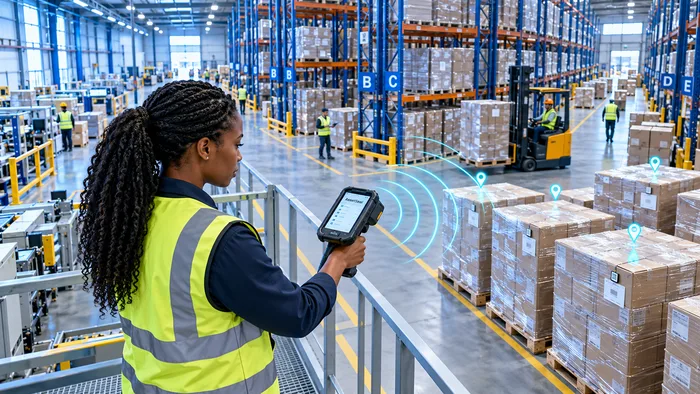
Read multiple eligible RFID-tagged assets without individual line-of-sight scanning, helping teams verify aisles, racks and storage areas more efficiently.
Explore cycle counting Canada
 USA
USA
 UAE
UAE
 India
India
 UK
UK
Manage warehouse inventory, equipment, pallets, returnable containers and other operational assets across warehouses, distribution centres, 3PL facilities and logistics networks.
 Faster cycle countingDock-load verificationReturnable asset trackingTag read01
Read multiple eligible RFID-tagged assets without individual line-of-sight scanning, helping teams verify aisles, racks and storage areas more efficiently.
Explore cycle counting 02
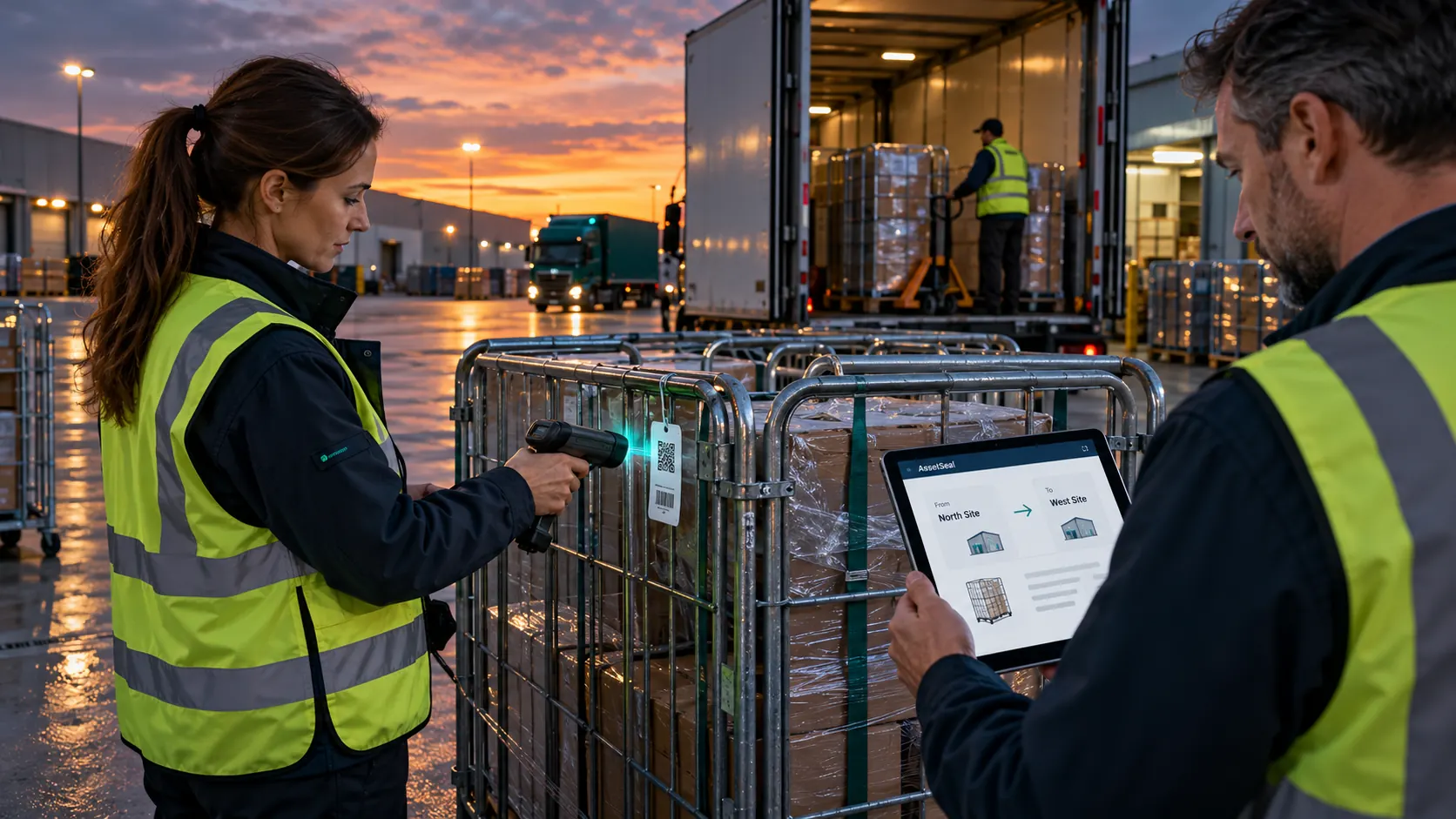
02Compare captured pallets, cases or tagged assets against expected load information before the shipment leaves the dock.
Explore dock verification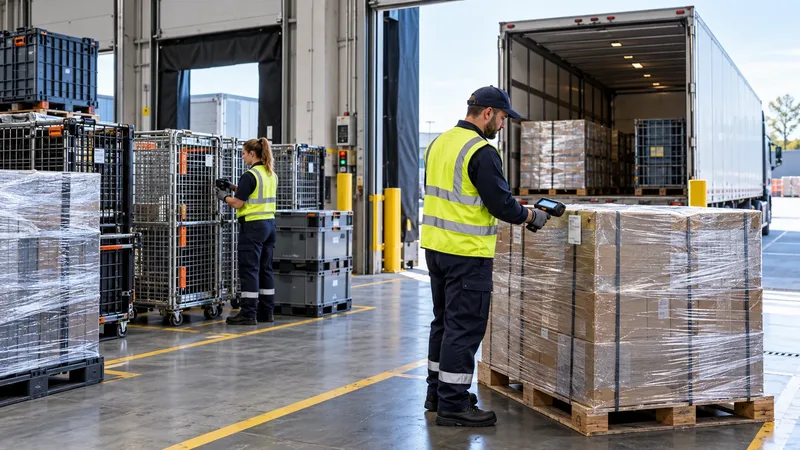 03
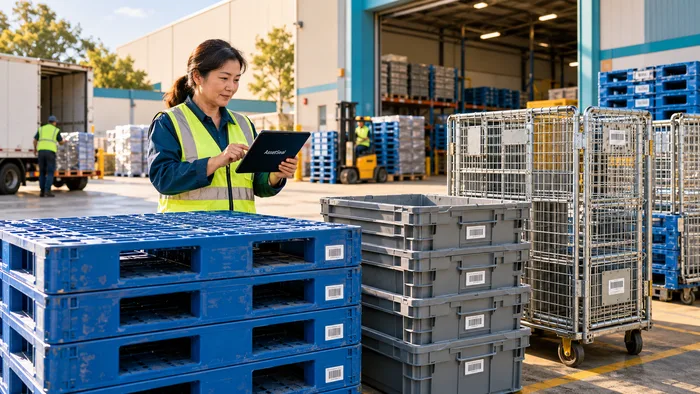
03Track pallets, totes, cages and other returnable assets by location, customer, custodian and return status.
Explore returnable tracking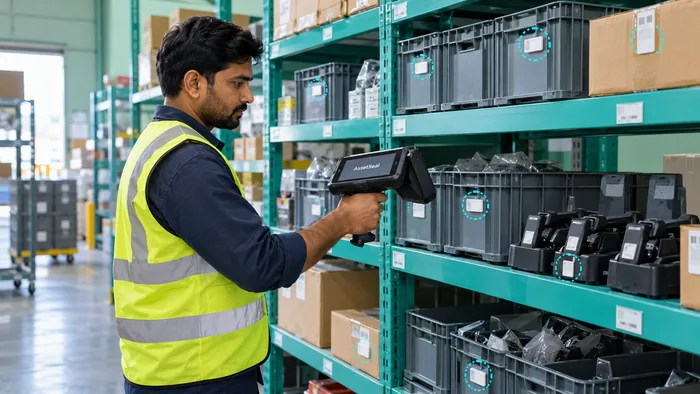
Manual counting pulls employees away from regular warehouse activity and can leave inventory records outdated soon after the count is completed.
Incorrect or missing pallets may not be identified until after dispatch, creating additional investigation, rework, delays and customer claims.
Pallets, totes, roll cages and reusable containers move between sites and customers without a dependable location, custody or return record.
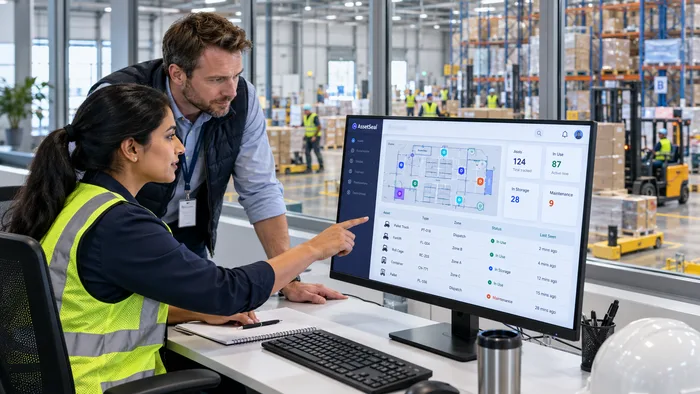
Managers may rely on periodic reports that do not reflect the latest captured asset movements, inventory exceptions and dock activity.
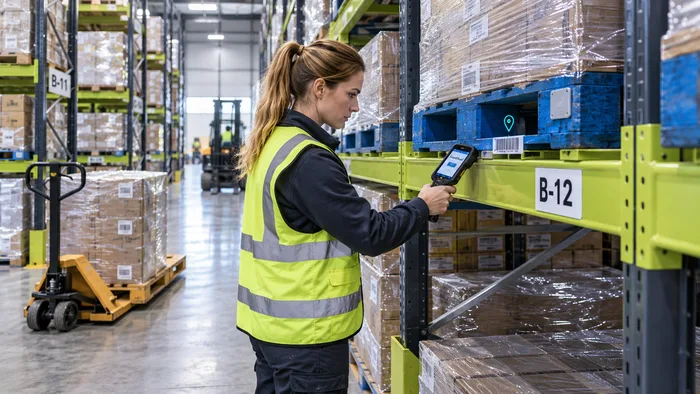
Read multiple eligible RFID-tagged assets during aisle and storage-area sweeps, reducing dependence on individual barcode scans.

Compare captured tagged assets against expected shipment information and flag discrepancies for review before dispatch.
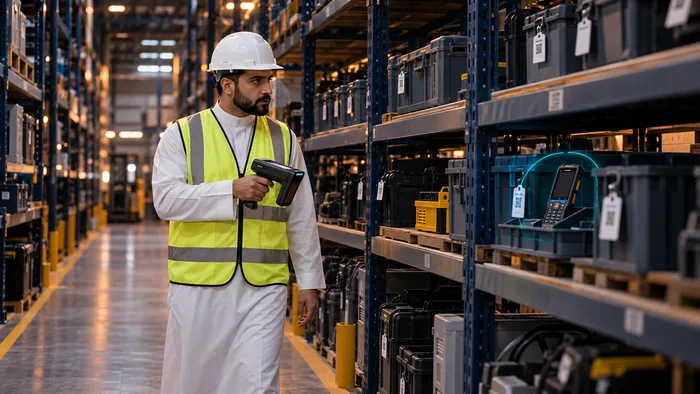
Maintain movement, location, customer, custody and expected-return information for pallets, totes, cages and reusable containers.
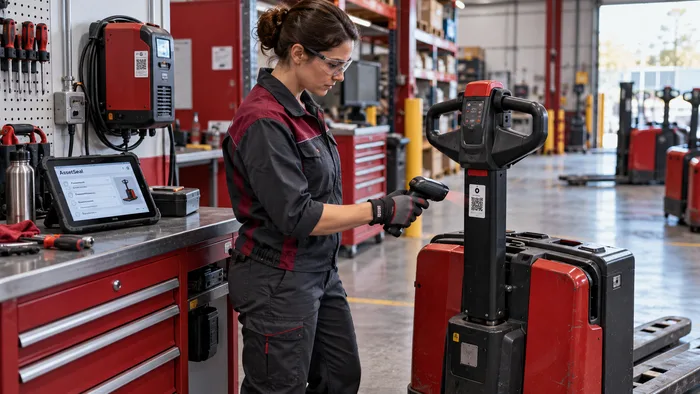
Record the bin, rack or zone associated with an asset during put-away and identify exceptions that require correction.
Review captured inventory positions, asset movements, exceptions and dock activity through role-appropriate operational views.
Exchange supported asset and movement information with ERP, WMS and other business systems through available APIs or structured imports and exports.
Review each asset’s latest recorded location, status, custody and activity history, together with exceptions that require attention.
Illustrative interface. Final configuration may vary by deployment.
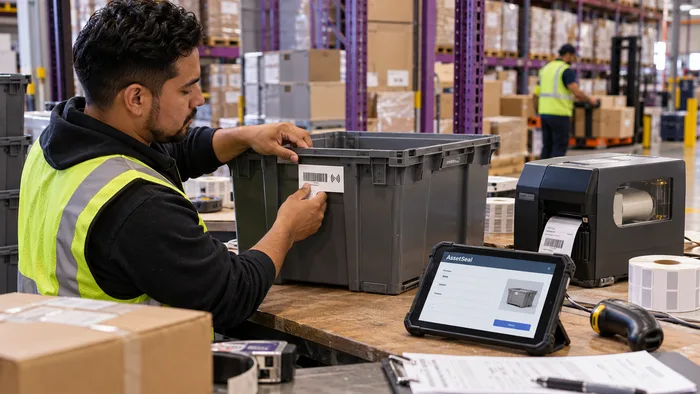
Assign suitable barcode or RFID identification at receiving, packing or asset registration.
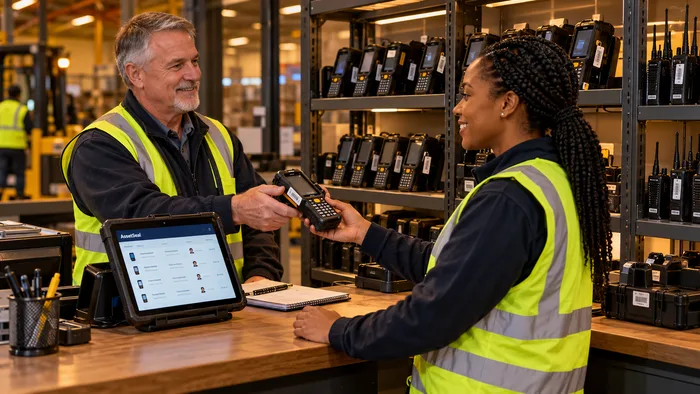
Record activity using mobile devices, rugged handhelds or configured RFID read points at docks, gates, aisles and storage areas.
Compare captured assets, quantities and locations against expected warehouse or shipment information to identify discrepancies.
Route loading discrepancies, missing assets, misplaced inventory or overdue returnables to the responsible warehouse or logistics team.
Less disruptive cycle countingVerify eligible tagged assets more efficiently across aisles and storage areas.
Earlier identification of loading discrepanciesCompare captured assets with expected load information before dispatch.
Stronger returnable-asset accountabilityMaintain location, customer, custody and expected-return records.
More current operational informationGive managers access to the latest captured asset positions, activity and exceptions.
Review the latest recorded locations, movements and exceptions for stock, equipment and returnable assets.
Support controlled data exchange with existing business systems through APIs and structured imports or exports.
Use traceable location, custody and status records to support reconciliation and audit preparation.
Compare captured asset activity and operational measures across sites, branches and logistics networks.
AssetSeal supports APIs and structured imports and exports for approved integration requirements. Compatibility and automation depend on the target system and implementation scope.
Capture eligible tagged assets at selected transition points where fixed RFID infrastructure is appropriate.
View hardwareRead eligible RFID-tagged assets across racks, aisles and storage areas without individual line-of-sight scanning.
View hardwarePrint and encode compatible RFID labels for approved asset and inventory workflows.
View hardwareBarcode generally requires each label to be visible and scanned individually. RFID can read multiple compatible tags without direct line of sight, which can make suitable cycle-counting workflows faster. Actual performance depends on tag type, asset density, materials, reader configuration and the warehouse environment.
No. Some organizations begin with pallets, cases, returnable containers, equipment or high-value assets. Item-level tagging can be introduced where the operational benefit supports the additional tag and implementation cost.
AssetSeal is not intended to replace a full warehouse management system. It adds asset identification, physical verification, movement and custody records that can complement an existing WMS or ERP. Data exchange depends on the available integration capabilities and agreed scope.
Yes. Returnable assets can be registered and tracked using their location, customer, custodian, status, movement and expected-return information.
Yes. Barcode can support individual scanning, while RFID can support faster contactless identification and selected fixed-reader workflows. The technologies can be combined according to the asset and process.

Tell us how inventory, equipment, pallets and returnable assets move through your warehouses, docks and logistics network. We will demonstrate how AssetSeal can support your asset register, cycle counting, dock verification and returnable-asset workflows.
